By Catherine McCoy | Photography by Shanna Wolf
Lighting has been described as the jewelry of the home and is a key component in bringing a space to life. It’s integral in creating a warm, inviting environment, and even sets the tone for how a room is used and the mood a homeowner wants to create.
Ultimately, good lighting will complement a room’s existing features — including ceiling height, colors and natural light exposure. Here are a few guiding factors homeowners should consider envisioning for the best, brightest space to fit their needs.
Choosing Materials and Bulbs
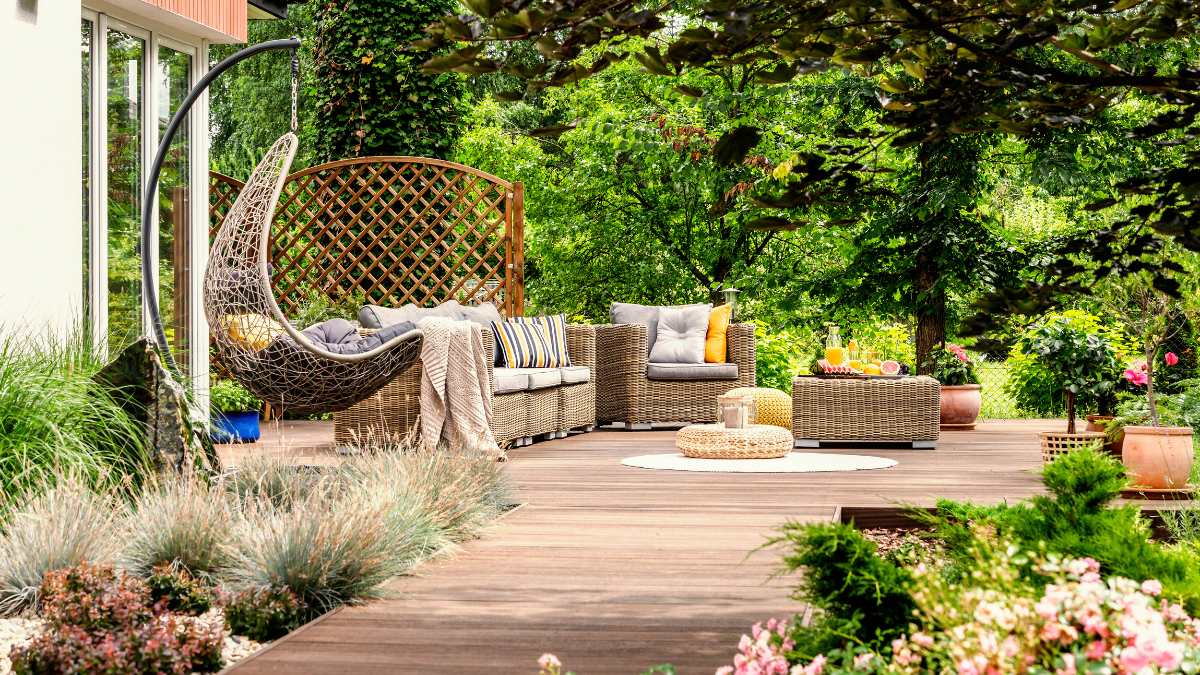
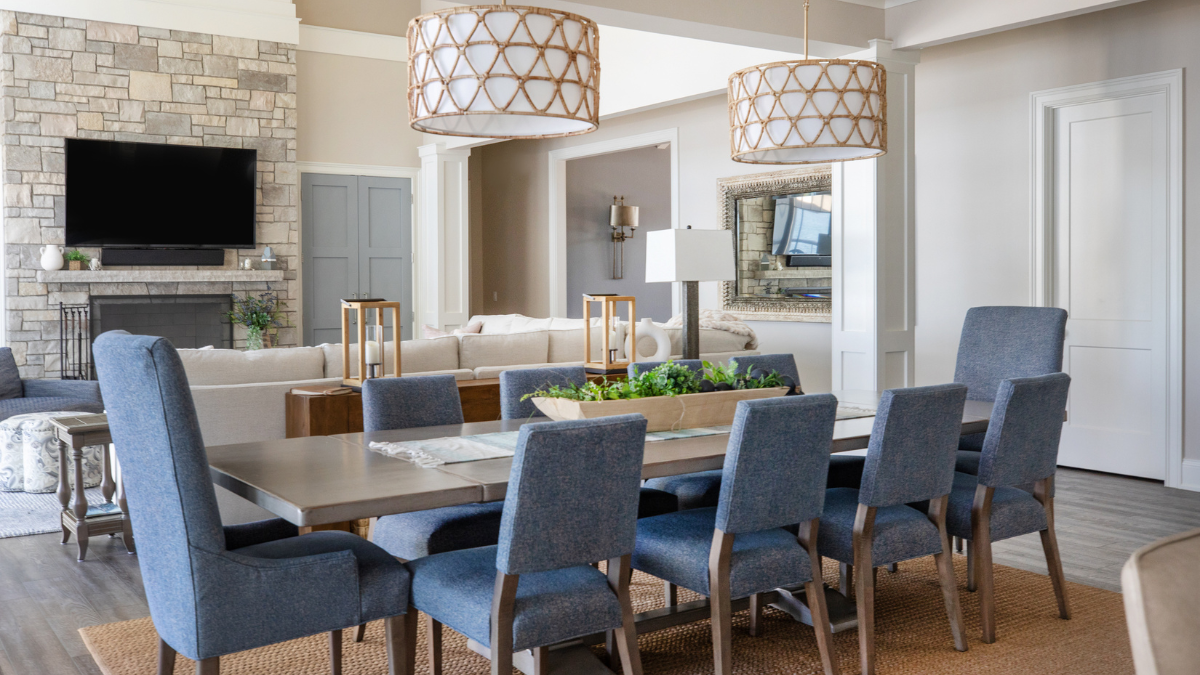
Recent lighting trends show an increased shift toward organic materials and clean-lined silhouettes. Joe Kroupa, president and owner of Caravelle Lighting, says that wicker, wood and rattan fixtures are popular. Modern simplicity is another go-to, with fixtures featuring clear or colored glass and sleek, minimalist designs.
When considering bulbs, LED remains the preferred choice, due to its exceptional energy efficiency and long lifespan.
“There are a variety of can lights and fixtures that are available with a color temperature selector switch built in; this makes the process of [integrating a homeowner’s preferences] much easier,” explains Phil Johnson, owner at Foremost Electric.
Modern home lighting is best curated to withstand the test of time, creating an ambience that tells a rich, intentional story.
Layering Lighting
When building a room’s lighting plan, Kroupa notes the importance of balancing both form and function when integrating fixtures. This may include installing switches for lamps, smart lighting for automated control or uplighting in ceiling fans.
To achieve a functional, refined lighting system, Johnson recommends combining ambient, task and accent illumination.
- Ambient lighting refers to overhead lighting, often consisting of can or slim-line lights.
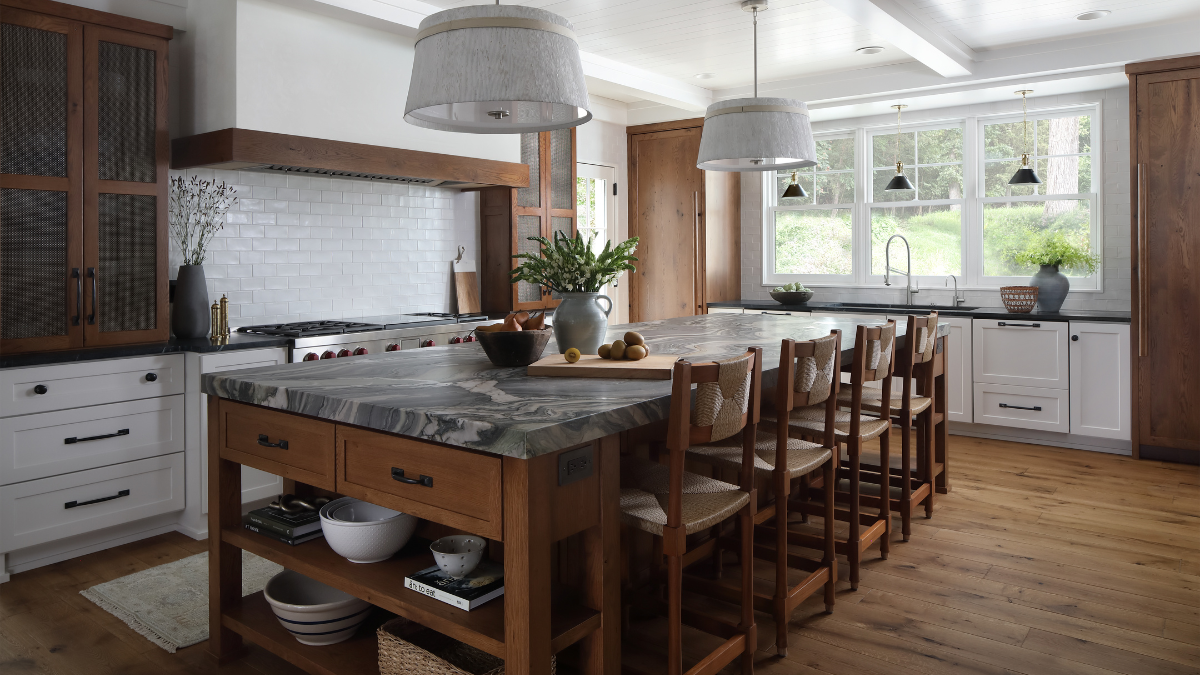
- Task lighting mixes style with functionality, found in desk lamps or kitchen fixtures.
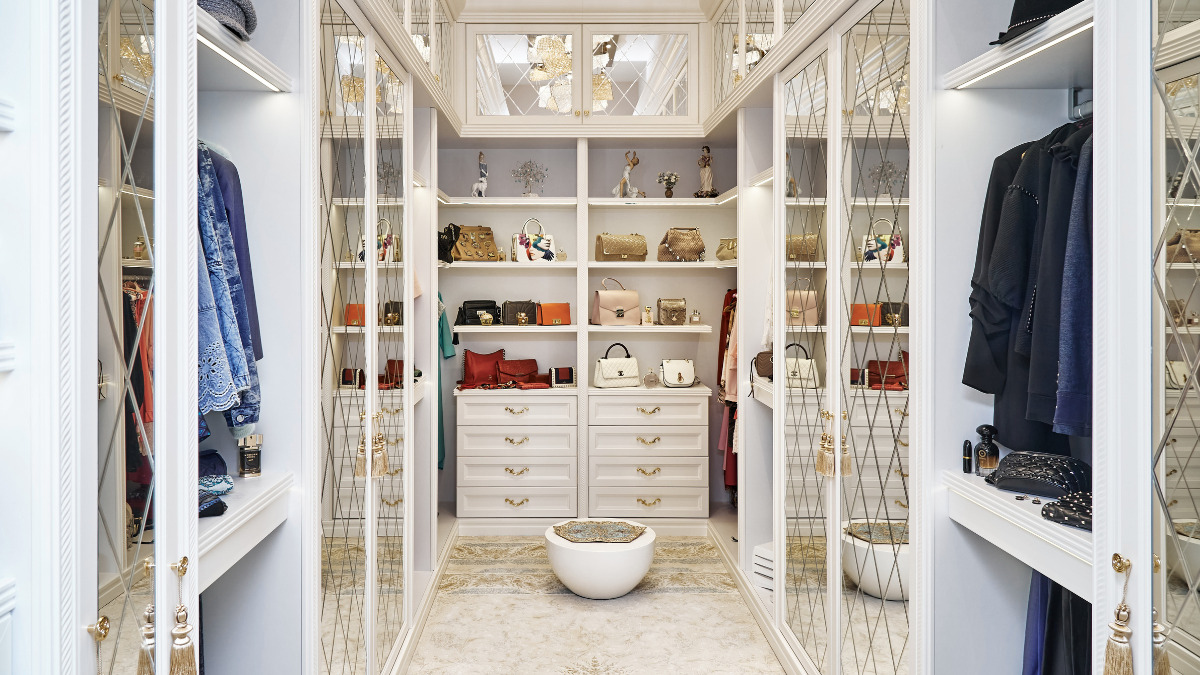
- Accent lighting, such as wall sconces or corner uplighting, is beneficial in focusing the eye on artwork or setting a softer tone within a designated zone.
When used cohesively, each feature serves its own purpose and brings attention to different aspects of the room.
Varying Lighting by Area
In choosing lighting across respective rooms, homeowners should ensure fixtures are cohesive — though they don’t necessarily need to match. Kroupa notes that designers are moving away from “lighting families,” where flush and accent lighting all relates to one another. Instead, he encourages homeowners to vary fixtures as they see fit.
“We have no problem mixing furniture, so we might as well mix fixtures,” Kroupa says.
Johnson advises thinking about what the room is used for to guide brightness levels.
“Kitchens, bathrooms and laundry areas are spaces to consider higher amounts of light when needed, but the capability to dim the lighting is crucial for ambiance,” he says. “Bedrooms, living and dining rooms are usually more of the relaxing areas. Decorative and accent lighting can give these spaces a softer feel.”
Homeowners should feel free to play with their lighting design, incorporating a variety of traditional, casual, formal and even organic fixtures. Ultimately, the best design incorporates the right amount of lighting for how the homeowner likes to live, while complementing their unique vision and style.